By Alexis Dipasquale-Qaqish
Construction liens are one of the most effective tools available to contractors, subcontractors, and suppliers who have not been paid for work performed on a construction project. In Ontario, the Construction Act, R.S.O. 1990, c. C.30 (the “Act”), generally provides parties who supply services or materials to an improvement with the right to preserve and perfect a construction lien against the project lands.
However, there are important exceptions. One of the most significant -and least commonly encountered- is construction work performed at federally regulated nuclear facilities.
The General Rule
Under the Act, a person who supplies services or materials to an improvement has a lien upon the owner's interest in the premises improved for the price of those services or materials, subject to the provisions of the Act (s. 14(1) of the Act).
While these rights apply to most construction projects in Ontario, they are not unlimited.
Liens and Nuclear Facilities
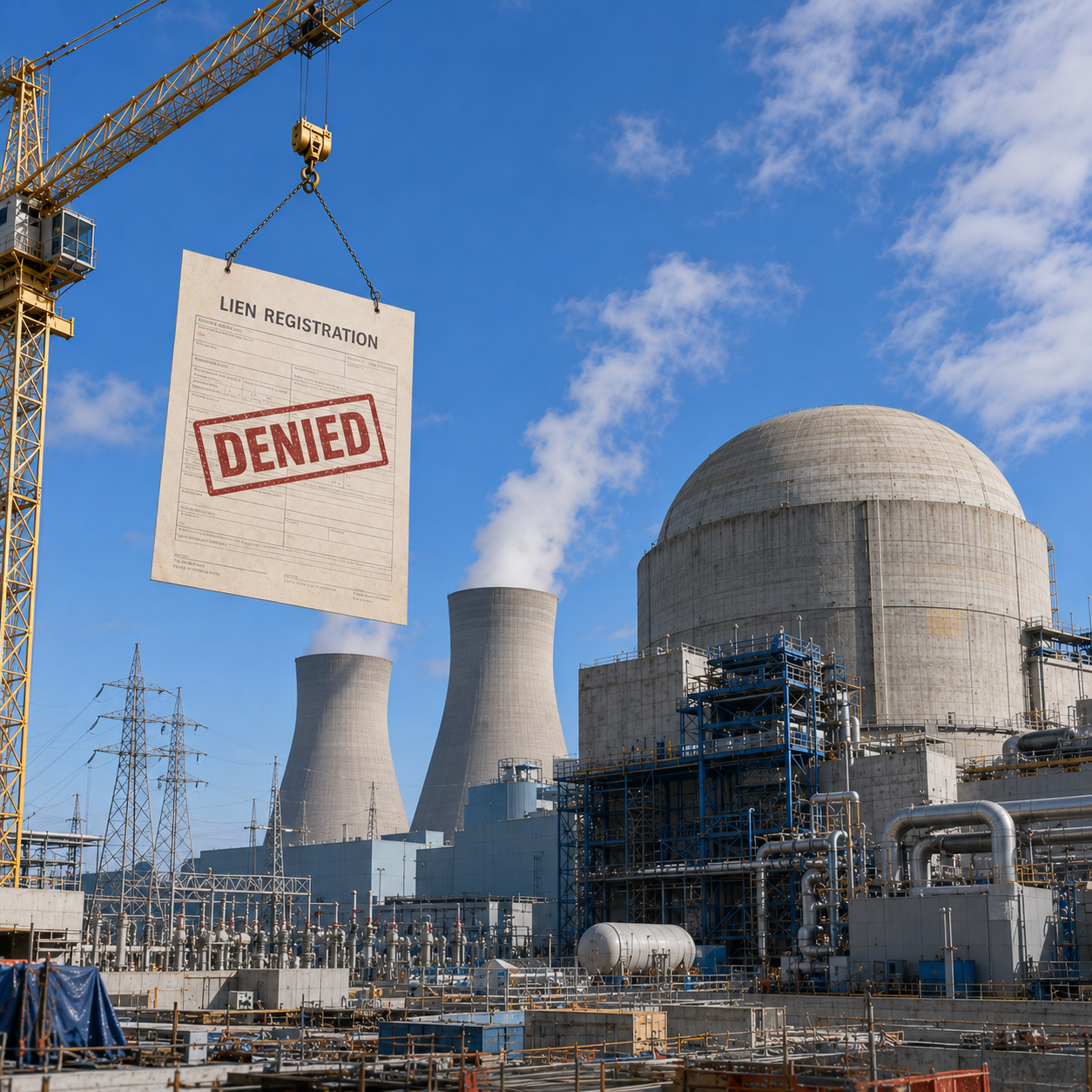
Nuclear facilities fall within the exclusive constitutional jurisdiction of the federal government. Parliament has enacted a comprehensive legislative framework governing the ownership, control, development, production, use, and possession of nuclear facilities (Comstock Canada Ltd. v. Atomic Energy of Canada Ltd., [2001] at paras. 6-7 [“Comstock”]).
This creates an important limitation on the application of the Act. Where the registration of a construction lien would interfere with the federal legislative scheme governing a nuclear facility, the provincial lien legislation cannot constitutionally apply (Comstock, at paras. 6-7, 12).
The constitutional issue is not unique to nuclear facilities. Canadian courts have recognized that provincial legislation, including lien legislation, may be constitutionally inapplicable where its application would impair the core of an undertaking falling within exclusive federal jurisdiction.
For example, in Vancouver International Airport v. Lafarge Canada Inc., the British Columbia Supreme Court considered whether provincial builders' lien legislation could apply to a leasehold interest in lands used solely for the construction, maintenance, and operation of a major interprovincial and international airport (Vancouver International Airport v. Lafarge Canada Inc., (c.o.b. Lafarge Construction Materials), [2009] B.C.J. at para. 24 [“Vancouver International Airport”]).
The Court held that provincial lien legislation could not apply where doing so would affect the core of the federal aeronautics power. In particular, the Court found that a lien charging the leasehold interest in lands used solely for the construction, maintenance, and operation of a major interprovincial and international airport would strike at the very essence or core of that federally regulated function (Ibid, at para. 24).
In reaching that conclusion, the Court applied the Supreme Court of Canada's decision in Canadian Western Bank v. Alberta, 2007 SCC 22, which confirms that provincial legislation is constitutionally inapplicable where it impairs the core of an exclusive federal power (Ibid, at para. 24).
That principle is particularly significant in the context of nuclear facilities. In Comstock, the Court considered whether a provincial construction lien could be registered against lands forming part of a federally regulated nuclear facility. The Plaintiff had performed work in connection with the construction of two nuclear reactors and an associated nuclear processing facility at Chalk River before preserving a construction lien against the lands following a payment dispute (Comstock, at paras. 1-3).
The Plaintiff argued that the provincial Act was legislation of general application and that an ownership interest held by a private company was sufficient to support the lien (Ibid, at para. 4).
The Court rejected those submissions, holding that the entire field of nuclear facilities, equipment, and nuclear substances falls within Parliament's exclusive constitutional jurisdiction (Ibid, at para. 6). The Court noted that federal legislation established a comprehensive regulatory scheme governing the ownership, control, development, production, use, and possession of nuclear facilities and that the definition of a “nuclear facility” expressly included the lands on which the facility was situated (Ibid, at para. 7).
In light of this legislative framework, the Court concluded that the registration of a construction lien against lands housing nuclear facilities would affect a “vital or essential or integral part of a federally regulated enterprise,” namely the ownership and transfer of those lands (Ibid, at para. 12).
Since the ownership and transfer of nuclear facility lands are matters comprehensively regulated by the federal government, the provincial Act could not constitutionally apply to create lien rights against those lands (Ibid, at paras. 12-13).
What Does This Mean for Contractors?
The fact that construction work is performed in Ontario does not, by itself, mean that the Act will provide a contractor or subcontractor with a lien remedy.
Where construction work is performed at a federally regulated nuclear facility, the federal legislative framework governing the facility must be considered before relying on the provincial lien regime. The constitutional division of powers may prevent the Act from applying to the project lands where a lien would interfere with the federal regulatory scheme.
Accordingly, a contractor working on a nuclear facility should not assume that it can preserve and perfect a construction lien simply because the work was performed in Ontario. Based on Comstock, a construction lien registered against lands forming part of a federally regulated nuclear facility would likely be found invalid where its registration interferes with the federal legislative scheme governing the ownership and control of those lands (Comstock, at paras. 7, 12-13).
Key Takeaway
Construction liens provide important security to contractors, subcontractors, and suppliers under the Act. However, those rights are subject to constitutional limitations.
The decisions in Canadian Western Bank, Vancouver International Airport, and Comstock demonstrate that provincial legislation cannot operate where its application would impair the core of an undertaking falling within exclusive federal jurisdiction (Canadian Western Bank v. Alberta, 2007 SCC 22; Vancouver International Airport, at para. 24; Comstock, at paras. 6-7, 12-13).
In the context of nuclear facilities, this means that the provincial Act cannot be relied upon to create a construction lien against lands where doing so would interfere with the federal legislative scheme governing nuclear facilities and their ownership and transfer (Comstock, at paras. 12-13).
For contractors, subcontractors, and suppliers working on nuclear projects, determining whether the project is lienable before taking steps to preserve a lien is therefore critical. Where lien rights are unavailable, identifying alternative contractual or legal remedies may be essential to protecting the contractor's ability to recover amounts owing.